OnlyFans Leaked on Telegram? How to Remove It and Stop the Spread

Finding your OnlyFans content circulating in Telegram groups is one of the most frustrating experiences a creator can face. Unlike traditional leak sites with DMCA forms and hosting providers you can pressure, Telegram operates in a gray zone: channels pop up faster than they disappear, and the platform’s track record on copyright enforcement has historically been inconsistent. With over 950 million monthly active users as of mid-2024, a number that crossed 1 billion in early 2025 (Statista, 2025), Telegram is too large and too embedded in how people communicate for the problem to fix itself. But that doesn’t mean you’re powerless. A Telegram DMCA takedown is possible, and after handling thousands of them, we’ve mapped out every removal path that actually works in 2026, from the official [email protected] process to abuse reports, Google deindexing, and strategies most creators never consider. This guide covers exactly how OnlyFans and Fansly content spreads on Telegram, how to find it, and the realistic steps to remove content from Telegram, including what to do when they don’t respond.
How OnlyFans Telegram Leaks Work
The pipeline from your OnlyFans page to a Telegram leak channel is depressingly simple. Here’s how it typically works.
A subscriber pays for your content, then screen-records or screenshots it. Sometimes they use browser extensions that bypass DRM protections. Sometimes it’s just a second phone pointed at their screen. The quality doesn’t matter to people sharing free content.
That captured content then gets uploaded to one of several places:
- Public Telegram channels with names like “OnlyFans Leaks” or your stage name. These can have tens of thousands of subscribers. With over 15 billion messages sent across Telegram every day (Statista, 2024), fresh content spreads almost instantly.
- Private Telegram groups that require an invite link or payment (yes, people charge for access to stolen content).
- Telegram bots that auto-distribute content when users send commands.
- External file hosts like Mega, Gofile, or Pixeldrain, with the download links shared through Telegram channels.
The operator of a leak channel rarely creates the content themselves. They aggregate from multiple sources: other Telegram channels, forums like SimpCity, scraper sites like Coomer, and direct submissions from subscribers looking for clout or revenge.
What makes Telegram particularly frustrating for creators is the speed of replication. When one channel gets taken down, the same content resurfaces in a new channel within hours. The operators know the game and keep backups.
Find out if your OnlyFans content is on Telegram
Before you can remove anything, you need to know what’s out there. Here are the most effective ways to search for your content on Telegram.
Search within Telegram itself
Open Telegram and use the global search bar. Try searching for:
- Your stage name or brand name
- Your OnlyFans username
- Variations and misspellings people commonly use
Telegram’s search covers public channels and groups. You won’t find private groups this way, but public channels are where most leak distribution happens.
Use Google to find indexed Telegram links
Many Telegram channels get indexed by Google. Try these search queries:
site:t.me "your stage name"site:t.me "your OnlyFans username""your name" telegram onlyfans
This often reveals channels you wouldn’t find through Telegram’s own search, because Google has a broader index of t.me links than Telegram’s internal search surfaces.
Check third-party Telegram directories
Sites like tgstat.com catalog Telegram channels and their subscriber counts. Search for your name there. These directories sometimes index channels that have already been removed from Telegram itself, which gives you a sense of how many channels were sharing your content.
One thing to check before filing anything: some channels use your name or stage name purely to attract followers, with no actual infringing content inside. They’re farming subscribers by trading on your audience — the name says “YourName Leaks” but the channel contains something else entirely (spam links, generic content, a pivot to paid ads). These channels are annoying and potentially damaging to your reputation, but they’re not copyright infringement in the traditional sense. If the channel contains no actual copies of your work, a DMCA notice won’t apply. You’d be looking at a different route: a trademark or impersonation report, or a platform ToS report for misleading content, rather than a copyright takedown. Confirming what’s actually inside a channel before you decide how to act saves you from filing the wrong type of complaint.
Set up ongoing monitoring
One-time searches aren’t enough. Leak channels reappear constantly. Consider setting Google Alerts for your stage name combined with “Telegram” or “leaked,” and periodically repeat the searches above. Professional monitoring services can automate this across Telegram and other platforms simultaneously.
Telegram’s DMCA takedown process
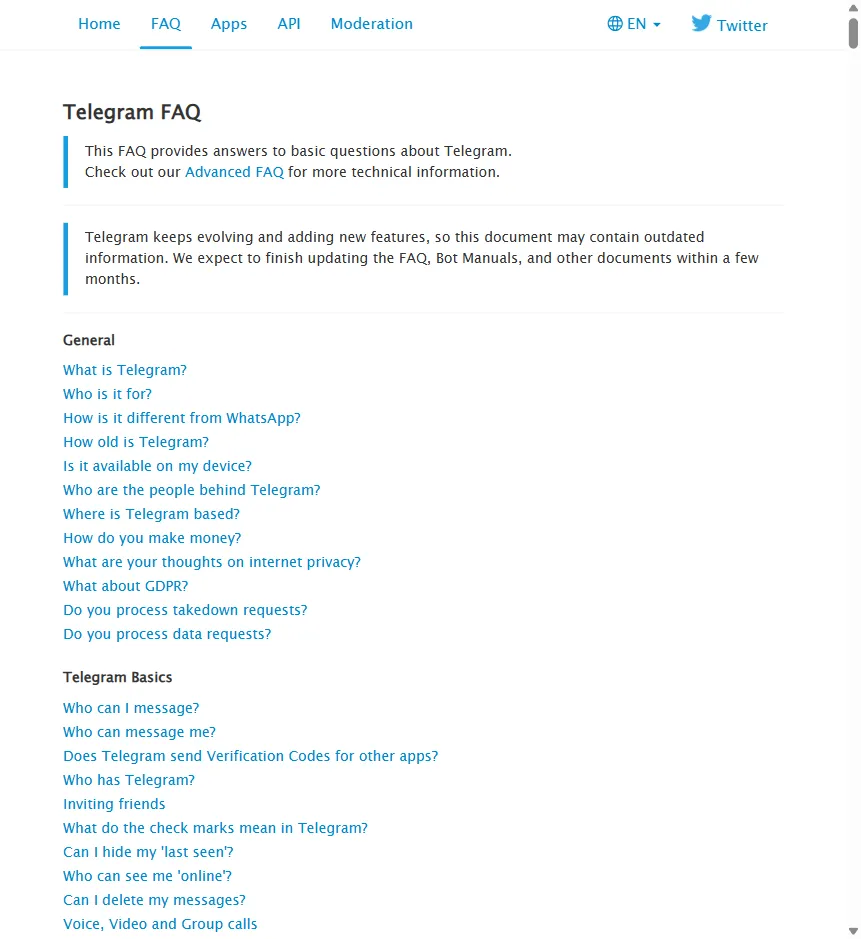
Telegram does have an official copyright complaint process. According to their FAQ, if you see “a bot, channel, sticker set, or other content that is a part of Telegram’s public platform” infringing your copyright, you can submit a complaint to [email protected].
What to include in your DMCA email
Your email to [email protected] should contain:
- Your full legal name and contact information (email, mailing address)
- A description of the copyrighted work being infringed (your photos, videos, etc.)
- Direct links to the infringing Telegram content (t.me links to specific messages or channels)
- Links to your original content for comparison (your OnlyFans profile URL)
- A good-faith statement that you believe the use is unauthorized
- A statement under penalty of perjury that the information in your notice is accurate and that you are the copyright owner or authorized to act on their behalf
- Your physical or electronic signature
This follows the standard DMCA notice format required under 17 U.S.C. Section 512. If you’re unsure about the wording, our DMCA template generator can help you draft a properly formatted notice.
The critical limitation: public content only
Telegram’s FAQ is very explicit about this: “Private groups and chats on Telegram are private amongst their participants. We do not process any requests related to them.”
That means if your content is being shared in a private Telegram group (one that requires an invite link), Telegram will not act on your DMCA complaint for that group. This is a significant gap, because many leak operations run private groups alongside their public channels.
For private group leaks, you’ll need to use alternative strategies covered later in this article.
Expected response times
Let’s be honest: Telegram’s DMCA response times are inconsistent. Some creators report channels being removed within 48 to 72 hours. Others wait weeks with no response at all. There’s no official SLA published by Telegram, and the company doesn’t have a web-based DMCA submission form the way platforms like Google or YouTube do.
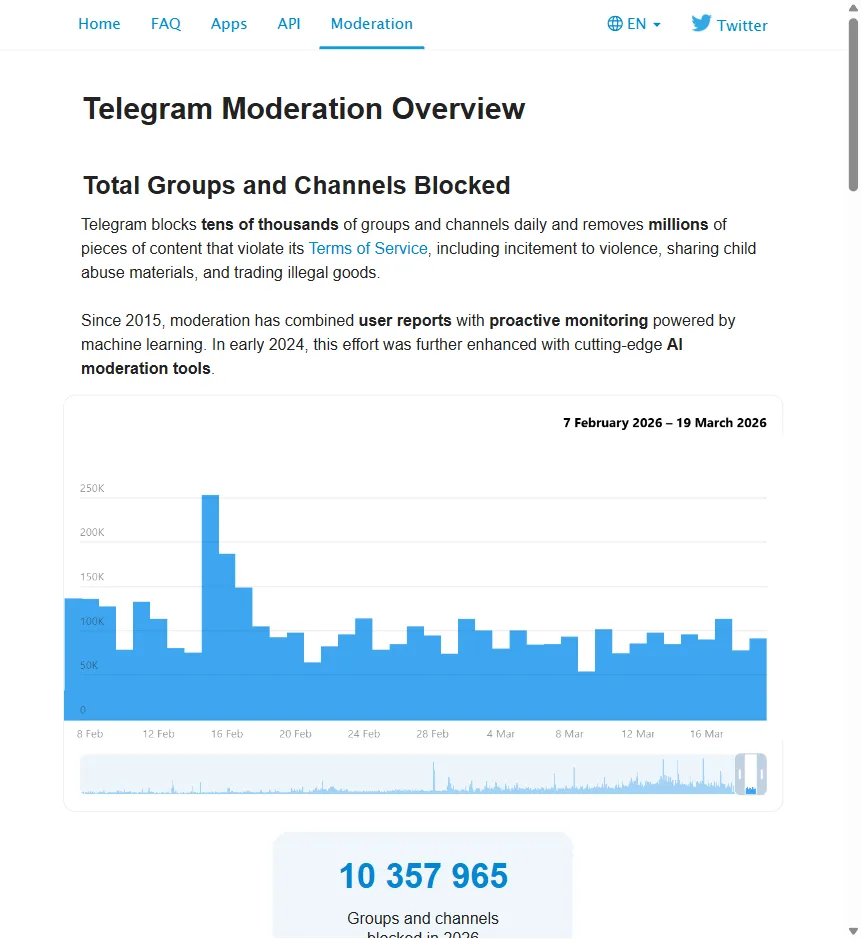
What has changed since late 2024 is that Telegram appears to be processing more reports than before. Their moderation overview page shows over 10.3 million groups and channels blocked in 2026, with the company stating they enhanced AI moderation tools in early 2024. Whether this translates to faster copyright-specific responses varies.
Report a Telegram channel for copyright infringement
Beyond the DMCA email, Telegram offers in-app reporting that can run in parallel. Use both approaches at once.
In-app reporting steps
All Telegram apps let you report content to moderators. The process:
- Open the channel or group containing your leaked content
- On Android: tap the message. On iOS: hold the message. On Desktop/Web: right-click.
- Select “Report”
- Choose the most relevant reason (copyright violation if available, or “Other”)
- Add a comment explaining that this is your copyrighted content being shared without permission
You can report individual messages or entire channels. Reporting the channel itself is usually more effective than reporting individual posts, since the channel will likely continue posting infringing content anyway.
Report the search term too
Telegram has an official bot, @SearchReport, that lets you flag search terms used to surface illegal content. If someone searching your name on Telegram is being served leak channels, you can report that search term directly. It’s a less obvious lever, targeting discoverability inside Telegram itself, not just the channel content.
The [email protected] route
Telegram also accepts reports via [email protected]. This email is primarily used for CSAM and terrorism reports (based on Telegram’s moderation page), but it’s also valid for other Terms of Service violations. Copyright infringement on public channels violates Telegram’s ToS, which prohibits “posting illegal pornographic content” on public channels and activities “deemed illegal in most countries.”
EU users: the DSA reporting form
If you’re in the European Union, Telegram provides a dedicated reporting form under the Digital Services Act at telegram.org/dsa-report. The DSA requires platforms to process reports about illegal content from EU users, and Telegram has published its compliance framework at telegram.org/tos/eu-dsa. This can be a stronger route than the general DMCA email for EU-based creators, because DSA obligations carry regulatory consequences that DMCA emails don’t.
Tired of chasing Telegram leak channels yourself?
What to do when Telegram doesn’t respond
This is the section most creators actually need. You sent the DMCA email, you filed in-app reports, and nothing happened. Now what?
Send a follow-up (and CC it right)
If you haven’t heard back within 7 to 10 business days, send a follow-up email to [email protected]. Reference your original email date and the specific t.me links. Some creators report that second or third emails eventually get attention, particularly if you include language about escalating to legal counsel.
Target the file hosts, not Telegram
Many Telegram leak channels don’t host the actual content on Telegram. They post download links to external file hosting services. This is actually good news for you.
File hosts like Mega, Gofile, Pixeldrain, and Mediafire all have their own DMCA processes, and most are significantly faster than Telegram’s. Find the links being shared in the Telegram channel, and file DMCA takedowns directly with each file host. When the download links go dead, the Telegram channel’s content becomes useless, even if the channel itself stays up.
Common file hosts used by Telegram leak channels:
| File host | DMCA contact | Typical response |
|---|---|---|
| Mega | [email protected] | 24 to 48 hours |
| Gofile | abuse form on gofile.io | 24 to 72 hours |
| Pixeldrain | DMCA form on site | 48 to 96 hours |
| Mediafire | [email protected] | 24 to 48 hours |
Consider legal escalation
If you’re dealing with persistent, large-scale infringement and Telegram isn’t responding, consulting a lawyer about sending a formal cease-and-desist letter (or even pursuing a John Doe subpoena to identify channel operators) may be worth exploring. Since Pavel Durov’s arrest in France in August 2024, Telegram has shown increased willingness to cooperate with legal processes. The company updated its privacy policy in September 2024 to clarify that it may share user data (including IP addresses and phone numbers) with authorities in response to valid legal orders.
Remove Telegram leaks from Google search results
Here’s something most creators overlook: even if Telegram is slow to remove a channel, you can often get the t.me links removed from Google’s search results much faster. This matters because many people discover Telegram leak channels through Google, not through Telegram’s own search.
File a Google DMCA request
Google’s copyright removal tool is at support.google.com/legal/troubleshooter/1114905. You’ll need:
- The specific t.me URLs that appear in Google search results
- Links to your original content (your OnlyFans profile)
- A DMCA declaration
Google typically processes these requests within 1 to 3 business days. Once a URL is delisted, it won’t appear in Google search results anymore. The content still exists on Telegram, but the discoverability drops significantly.
There’s a practical complication worth knowing upfront, though. What Google actually indexed is the public-facing channel page at t.me/channelname. That page often shows nothing more than a channel name, a generic profile photo, and a subscriber count. No infringing content is visible. The actual leaked photos and videos are inside the channel, accessible only to members. Google’s review team looks at the URL you submit. If all they see is a generic channel page with no visible infringement, they may reject your request on the grounds that the page itself doesn’t contain your copyrighted material.
This is frustrating but manageable. A few approaches that improve your odds:
- Submit specific t.me message links rather than (or in addition to) the channel page URL, if any messages are publicly previewable
- Include a detailed written explanation clarifying that infringing content is behind the channel’s join gate, and reference the channel name and the nature of the content
- Target Google’s removal of the channel from autocomplete and “People Also Search For” suggestions, not just direct search results
When Google deindexing is blocked by this issue, shifting focus to file host takedowns (covered earlier) often gives faster, more concrete results.
Use Bing and other search engines too
Don’t forget that Google isn’t the only search engine. Submit DMCA requests to Bing (via Microsoft’s reporting form) and any other search engines where t.me links appear. For a detailed walkthrough of this process, see our OnlyFans content removal guide.
Target the file hosts behind Telegram leak channels
We touched on this in the escalation section, but it deserves its own focus because it’s one of the most effective strategies available.
Telegram leak channels are distribution hubs. The actual content files often live elsewhere. When you remove the files at their source, every Telegram channel linking to them breaks.
How to identify which file hosts are being used
You don’t need to join the channel. Look at:
- Preview text visible without joining (public channels show some content in preview)
- Cached versions of the channel from Google (search
cache:t.me/channelname) - Third-party Telegram analytics sites that index channel content
Prioritize by impact
Not all file hosts respond equally. Focus your DMCA efforts on hosts that are (a) responsive to takedowns and (b) hosting the most content. US-based or EU-based file hosts are generally more responsive than offshore services.
If leak channels use Telegram’s own file storage (direct uploads rather than external links), you’re back to relying on Telegram’s DMCA process or the other strategies in this guide.
Realistic removal timelines for Telegram
Let’s set honest expectations. Telegram takedowns don’t work like Instagram or YouTube takedowns. Telegram adds roughly 2.5 million new users every day (Statista, 2025), which means the audience for any given leak channel can keep growing even while you’re waiting for a response. Here’s what you’re looking at:
| Method | Typical timeline | Success rate |
|---|---|---|
| [email protected] | 2 to 30+ days | Moderate (public channels only) |
| In-app report | 1 to 14 days | Low to moderate |
| [email protected] | 3 to 21 days | Low to moderate |
| Google deindexing | 1 to 3 days | High |
| File host DMCA | 1 to 4 days | High |
| DSA report (EU) | 3 to 14 days | Moderate to high |
The biggest variable is persistence. Channels that get taken down often reappear under different names. A single takedown rarely solves the problem permanently. Ongoing monitoring and repeated action is what actually stops the spread over time.
Need persistent monitoring across Telegram and other platforms?
Prevent future Telegram leaks
Removal is reactive. Prevention, while not perfect, reduces the volume of content that makes it to Telegram in the first place.
Watermarking your content
Visible or invisible watermarks let you identify which subscriber leaked your content. Visible watermarks with subscriber-specific identifiers (like a partial username overlay) serve as a deterrent. Invisible forensic watermarks can help identify the source after a leak has happened.
Use platform DRM features
OnlyFans offers DRM protections that make screen recording harder (not impossible, but harder). Enable every content protection setting your platform offers. It won’t stop determined leakers, but it raises the effort required and filters out casual re-sharing.
Vet your subscribers
Some creators use verification services or manual vetting for high-priced subscription tiers. If you notice a pattern of leaks after specific subscribers join, consider blocking those accounts. CopyrightShark’s community protection features include username checking against known leaker databases.
Monitor regularly
Set a recurring reminder to search for your content on Telegram and Google. Monthly monitoring catches new leak channels before they grow large audiences. The earlier you report a channel, the fewer people download your content from it.
When to hire a professional removal service
DIY takedowns work, but they eat your time. Every hour spent filing DMCA emails and searching for leak channels is an hour not spent creating content or marketing yourself.
Professional removal services like CopyrightShark handle the entire pipeline: automated Telegram monitoring that runs without you lifting a finger, bulk takedown filing across Telegram, file hosts, and search engines at once, persistent follow-up when platforms go silent, and coverage across SimpCity, Coomer, and wherever else your content appears.
If you’re spending multiple hours per week on takedowns and still seeing leaks persist, a service running 24/7 will outpace anything you can do manually. Our OnlyFans protection plans are built specifically for this.
Frequently asked questions
- What information does a Telegram DMCA request need?
- Your full name and contact details, a description of the copyrighted work (link to your OnlyFans profile works), direct t.me links to the infringing content, a good-faith statement that the use is unauthorized, and a declaration under penalty of perjury that the information is accurate. Send it to [email protected].
- What is Telegram's DMCA email address?
- Telegram's DMCA email is [email protected]. You can also report abuse to [email protected]. For EU users, a dedicated DSA reporting form is available at telegram.org/dsa-report.
- Are private Telegram groups covered by DMCA?
- No. Telegram explicitly does not process requests for private groups and chats. Their FAQ states these are private amongst participants. DMCA takedowns via [email protected] only apply to public content: channels, bots, and sticker sets. For private group leaks you need alternative strategies like targeting file hosts or legal escalation.
- What happens after Telegram processes my DMCA report?
- If your request is valid, Telegram blocks access to the content. Users trying to open the channel or message will see a notice that it cannot be displayed. The channel itself may remain visible in search but its content becomes inaccessible.
- How long does Telegram take to respond to copyright reports?
- There's no official SLA. Reports via [email protected] typically take 2 to 30+ days. In-app reports may be faster for clear violations. Filing through multiple channels (email, in-app, DSA form) simultaneously improves your chances.
- Can police track Telegram channels sharing leaked content?
- Since September 2024, Telegram's updated privacy policy allows sharing user data (IP addresses, phone numbers) with authorities in response to valid legal orders. Previously, Telegram stated it had disclosed zero bytes of user data to third parties.
- Can I sue someone for sharing my OnlyFans on Telegram?
- Yes, if you can identify them. Copyright infringement allows for civil lawsuits under laws like the DMCA (US) or the DSM Copyright Directive (EU). A lawyer can file a John Doe subpoena to compel Telegram to reveal the channel operator's identity.