Stop Patreon Piracy: A Creator's Guide

You spent months creating that digital art series, recording your podcast, or building your online course. Then you find it on a piracy forum - free for anyone to download. Patreon piracy hits creators across every category, and stopping Patreon piracy requires understanding both your rights and the best removal strategies for your specific content type.
Why are Patreon leaks harder to fight?
Patreon isn’t a single content type like OnlyFans or Fansly. It hosts a wide mix of creators:
- Digital artists and illustrators creating exclusive artwork, tutorials, and PSDs
- Podcasters offering early-access episodes and bonus content
- YouTubers sharing extended cuts and behind-the-scenes footage
- Musicians releasing exclusive tracks, stems, and sample packs
- Writers and journalists publishing premium articles and ebooks
- Educators building courses, workshops, and educational resources
- Game developers sharing development builds and assets
- NSFW creators producing adult content (similar to OnlyFans)
Each category has its own piracy problems. A comic artist’s work gets reposted to Pinterest without credit. A podcaster’s early-access episodes appear on RSS scraper sites. An educator’s $500 course shows up on torrent networks. One-size-fits-all advice falls apart fast.
Do I own my Patreon content?
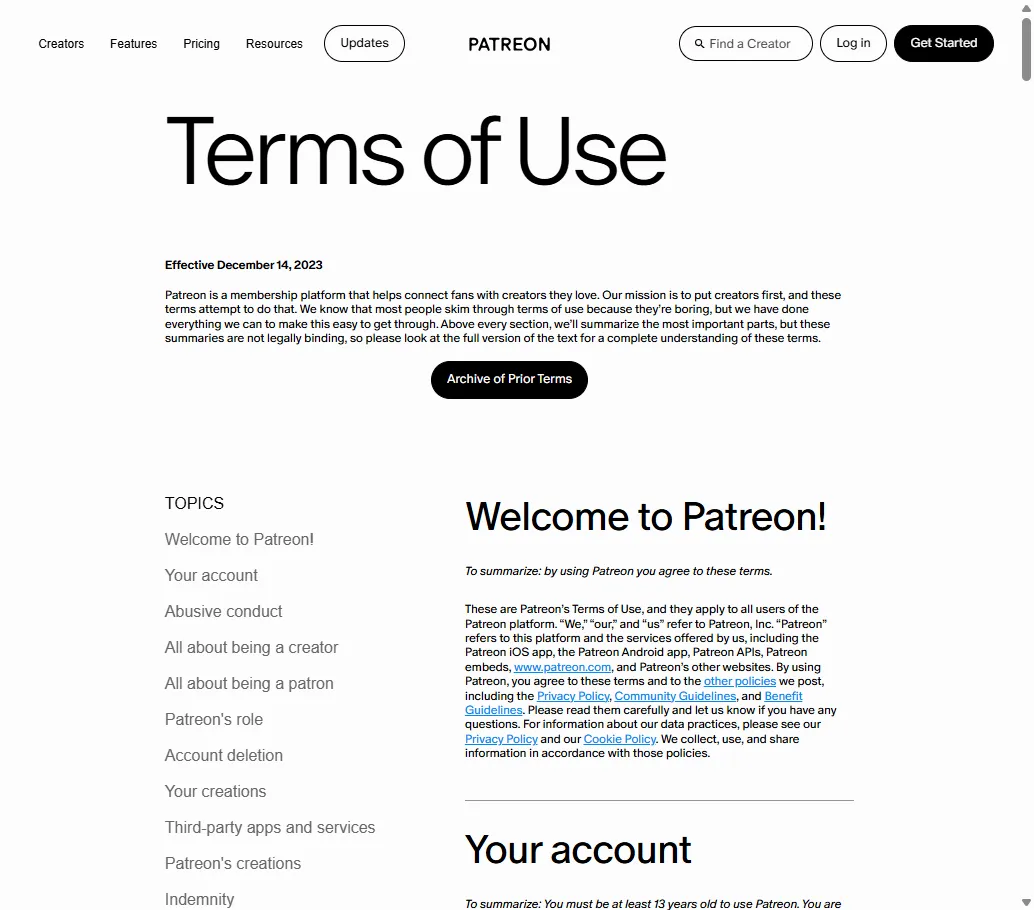
Yes. Patreon’s Terms of Service say creators keep full ownership of everything they upload.
From Patreon’s Terms of Use:
“Creators keep full ownership of their creations… we are not buying your intellectual property rights or leasing them from you for our gain.”
When your Patreon content is stolen, you have the legal standing to demand removal wherever it appears. Your rights include:
- Reproduction - only you can authorize copies
- Distribution - you control where and how it’s shared
- Public display - you decide where it appears publicly
- Derivative works - nobody can create work based on yours without permission
These rights apply no matter where the piracy happens: social media, forums, torrent sites, or file hosts.
Where is my leaked Patreon content appearing?
Knowing where your specific content type shows up makes takedowns far more effective.
For digital artists and illustrators
Art gets pirated everywhere:
| Platform Type | Examples | Piracy Method | Takedown Difficulty |
|---|---|---|---|
| Social reposting | Pinterest, Tumblr, Twitter/X | Uncredited reposts | Medium - forms available |
| Art communities | DeviantArt, ArtStation | Direct uploads claiming ownership | Medium - active moderation |
| Image boards | 4chan, Boorus | Anonymous sharing | Hard - limited moderation |
| AI training datasets | LAION, Common Crawl scrapers | Mass scraping | Very hard - often overseas |
Common scenarios:
- Full PSD/source files shared on Discord servers
- Tutorial videos ripped and re-uploaded to YouTube
- Art posted without credit by “art sharing” accounts
- Work included in AI training datasets without consent
For podcasters and audio creators
Podcast piracy often goes unnoticed longer. Audio is harder to search for than images:
| Platform Type | Examples | Piracy Method | Takedown Difficulty |
|---|---|---|---|
| RSS scrapers | Podcast addict clones, unofficial apps | Automated feed copying | Medium - contact app stores |
| File hosts | Mega, Google Drive | Episode archives | Medium - DMCA forms available |
| Torrent sites | Various | Season/show packs | Hard - decentralized |
| YouTube re-uploads | ”Full episode” channels | Audio-to-video conversion | Medium - Content ID helps |
Common scenarios:
- Early-access episodes appearing on public feeds same day
- Bonus episodes bundled and shared on file hosts
- Ad-free versions distributed to avoid sponsor messages
For musicians and composers
Music piracy has been around a long time, and the channels are familiar:
| Platform Type | Examples | Piracy Method | Takedown Difficulty |
|---|---|---|---|
| Music sharing sites | SoundCloud reposts, Bandcamp rips | Direct uploads | Medium |
| Sample/stem sites | Splice clones, “free sample” sites | Stems and project files | Medium |
| Torrent sites | Discography torrents | Complete archives | Hard |
| YouTube | Unofficial uploads | Full tracks with art | Medium - Content ID |
Common scenarios:
- Exclusive tracks appearing on Spotify/Apple Music by fake accounts
- Sample packs shared on producer forums
- Stems from patron-only releases used in others’ tracks
For educators and course creators
Educational content piracy is well-organized, often run by people who specialize in it:
| Platform Type | Examples | Piracy Method | Takedown Difficulty |
|---|---|---|---|
| Course piracy sites | Specific forums (constantly changing) | Organized sharing | Hard - offshore hosts |
| Torrent sites | General trackers | Course archives | Hard |
| Telegram groups | Education-focused channels | Direct file sharing | Medium - 30-50% success |
| Google Drive/Mega | Shared folder links | Complete course dumps | Medium |
Common scenarios:
- Entire course catalogs archived and shared within hours of release
- Course materials sold cheaply on black markets
- Screenshots of text-based lessons shared freely
For NSFW/adult creators
Adult content piracy follows similar patterns to OnlyFans. See our OnlyFans leak removal guide for detailed coverage. The main differences for Patreon adult creators:
- Less dedicated “leak site” infrastructure than OnlyFans
- Content often appears alongside SFW Patreon content on general piracy forums
- Patreon’s content moderation means some creators host externally, which makes takedowns harder
Does Patreon protect my content from leaks?
Patreon offers a few native protection features. They are not as thorough as what dedicated creator platforms provide, but they are worth knowing about.
Private RSS link protection (for podcasters)
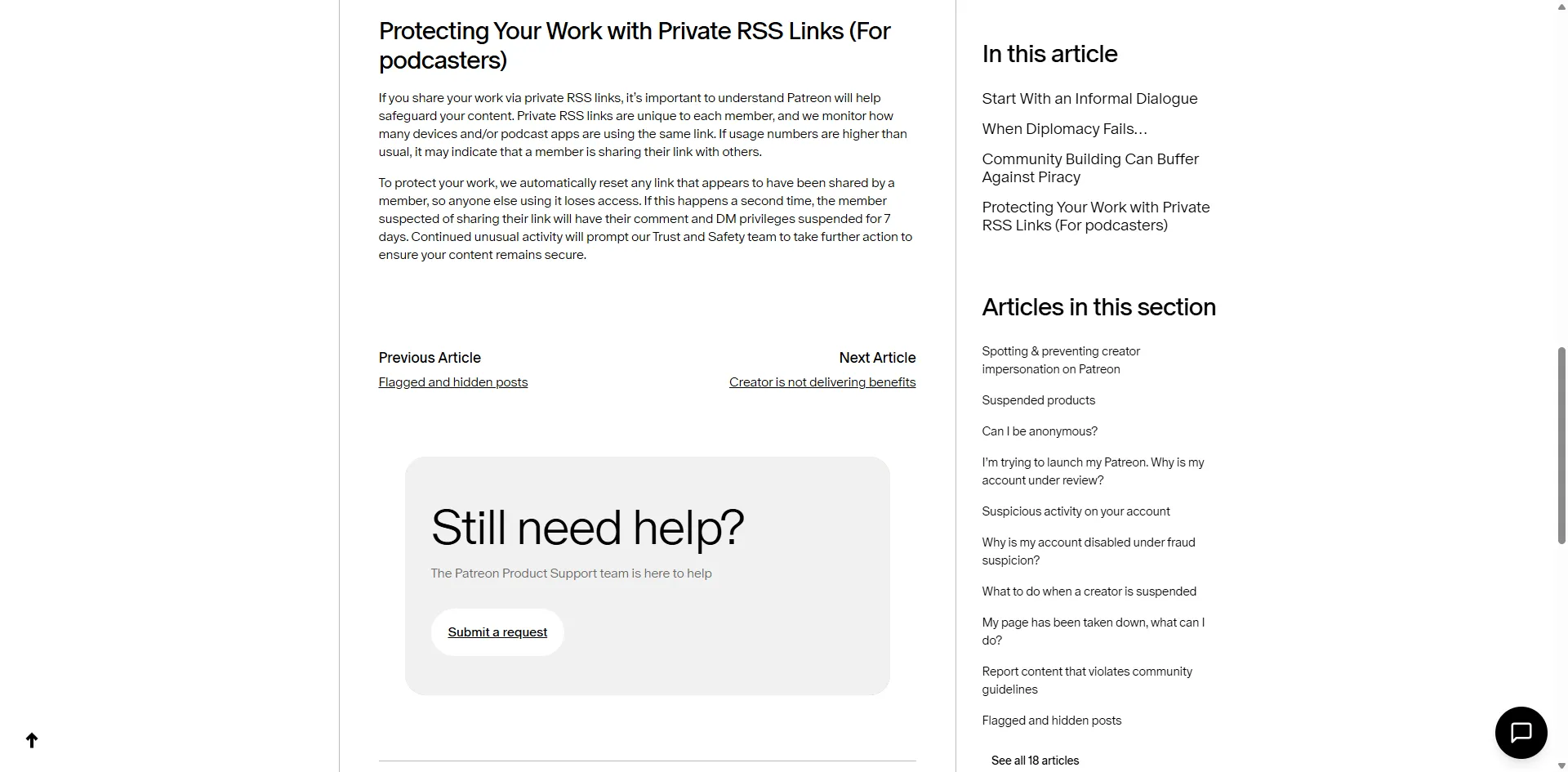
This is Patreon’s strongest anti-piracy feature. According to Patreon’s help documentation:
- Unique links per patron - Each patron gets a unique RSS feed URL
- Automatic monitoring - Patreon monitors how many devices and podcast apps use each link
- Automatic reset - If usage suggests sharing, the link resets automatically and anyone else using it loses access
- Progressive enforcement:
- First offense: Link automatically reset
- Second offense: 7-day suspension of comment and DM privileges
- Continued abuse: Trust & Safety team takes further action
So podcasters actually have real protection here. If a patron shares their feed, Patreon detects it and revokes access automatically.
Patron visibility controls
When creating or editing a post, you can control who sees your content:
- Public posts - visible to everyone
- Patrons only - requires active subscription
- Tier-specific - only certain membership levels
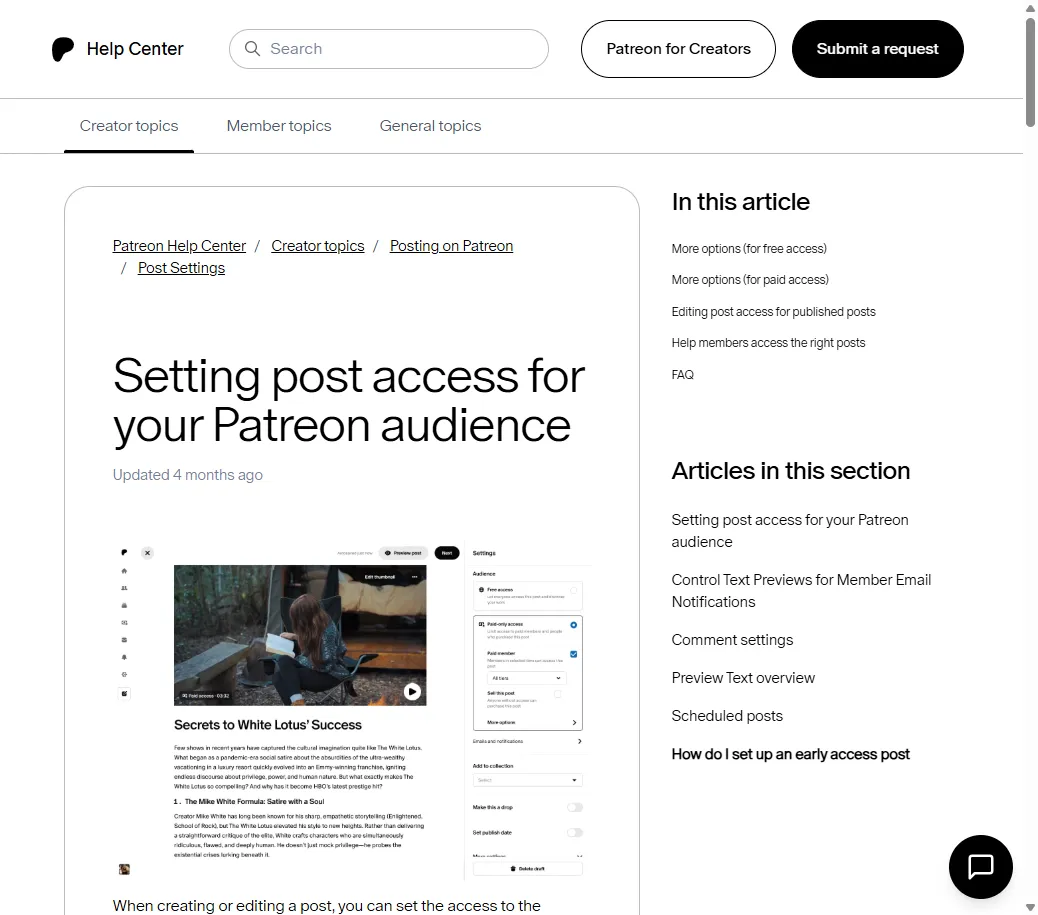
These controls prevent casual browsing but don’t stop determined pirates who subscribe specifically to leak content.
Download settings
For some content types, you can disable direct downloads, forcing patrons to view in-browser. But this has limits:
- Screen capture and screen recording bypass this
- Browser extensions can extract embedded media
- Determined users will always find ways to save content
No built-in watermarking
Unlike OnlyFans or Fansly, Patreon doesn’t offer automatic watermarking. You must implement your own:
- Add watermarks to images before uploading
- Include audio watermarks in podcast/music files
- Use on-screen watermarks in video content
How do I protect my content before it gets leaked?
Patreon’s built-in protection is thin, so you need strategies tailored to your content type.
For digital artists: watermarking and resolution control
Watermarking approaches:
-
Visible watermarks - Your signature or logo on the artwork
- Place in areas that are hard to crop (center, integrated into composition)
- Use semi-transparency so it doesn’t ruin the viewing experience
- Different watermarks for preview vs. full resolution
-
Hidden watermarks - Steganographic data embedded in pixels
- Survives compression, cropping, screenshots, and social media re-encoding
- Helps prove ownership in disputes
- Use our free invisible watermark tool to embed AI-resistant hidden watermarks, or add C2PA content credentials for cryptographic authorship proof
-
Tiered resolution strategy:
- Public: Low resolution previews
- Basic tier: Web-resolution finals
- Premium tier: Full resolution + source files
For PSD/source file sharing:
- Flatten sensitive layers before sharing
- Remove or rename layers to make files less useful for replication
- Consider sharing process videos instead of source files
For podcasters: protecting early-access and bonus content
RSS feed security:
-
Private RSS feeds - Patreon generates unique feeds per patron
- Revokes automatically when subscription ends
- Harder to share than static links
-
Delayed public release - Most effective protection
- Patrons get 1-2 week early access
- Content goes public eventually (limiting piracy incentive)
-
Patron-only bonus content:
- Keep truly exclusive content off RSS entirely
- Host directly on Patreon posts
- Use unlisted YouTube/Vimeo links with Patreon authentication
Audio watermarking:
- Insert brief audio identifiers (“This episode brought to you by [patron name]‘s support”)
- Use unique audio signatures per episode
- Tools: Auphonic, custom scripts
For musicians: stems, samples, and releases
Protecting music releases:
-
Staggered release windows:
- Patrons: Immediate access
- Streaming platforms: 2-4 weeks later
- This cuts the piracy incentive sharply
-
Stem and sample pack protection:
- Include metadata with purchaser info
- Unique audio identifiers in each pack
- Consider license keys that link to patron accounts
-
Content ID registration:
- Register tracks with YouTube Content ID
- Use DistroKid, CD Baby, or direct registration
- Automatically catches re-uploads
For educators: course and tutorial protection
Educational content gets pirated more than any other type. Here is what works:
Content segmentation:
- Don’t put your entire course in downloadable form
- Break into small modules that require platform access
- The most important content should require live sessions or community interaction
Value beyond downloads:
- Community access (Discord, forums) that can’t be pirated
- 1-on-1 feedback and reviews
- Updated content that requires active subscription
- Certificates or credentials
Technical protection:
- Host video on platforms with DRM (Vimeo Pro, Wistia)
- Use expiring links for downloadable resources
- Watermark PDF worksheets with patron name/email
For game developers: builds and assets
Game development on Patreon has a built-in tension: patrons expect playable builds, and those builds are easily shared.
Protecting development builds:
-
Time-limited access tokens - Generate download links that expire after 24-48 hours
- Services like Itch.io offer patron-gated downloads
- Self-hosted solutions with expiring URLs
-
Build watermarking - Embed patron identifiers in the build
- Display patron name on title screen or splash
- Include patron ID in crash reports/logs
- Makes leaked builds traceable
-
Staged access approach:
- Lower tiers: Screenshots, devlogs, design documents
- Mid tiers: Demo builds, limited content
- High tiers: Full development builds
- This limits exposure if lower-tier content leaks
-
Community-first strategy:
- Discord access as primary value (can’t be pirated)
- Voting on features, direct feedback
- Builds become bonus, not main attraction
Protecting game assets (sprites, models, audio):
- Release in proprietary formats when possible (requires your engine/tools)
- Include license.txt files with patron account info
- Watermark preview images of assets
- Consider that leaked asset packs can sometimes work as marketing (spread drives interest in the full game)
Should I contact the person who leaked my content?
Before filing formal takedowns, Patreon recommends opening an informal dialogue first:
“Not everyone knows about IP laws, and people often share copyrighted material without knowing they’ve done anything wrong. When ‘piracy’ turns out to be an honest mistake, a friendly message identifying yourself as the rights holder and requesting that the content be removed may be enough to solve the problem.”
When informal contact makes sense:
- Art reposted without credit on social media (often fans, not malicious)
- Content shared in small Discord servers
- Individual reposts vs. organized piracy operations
When to skip straight to DMCA:
- Dedicated piracy sites/forums
- Commercial exploitation of your work
- Repeat infringers you’ve contacted before
- No contact information available
How do I get my leaked content removed?
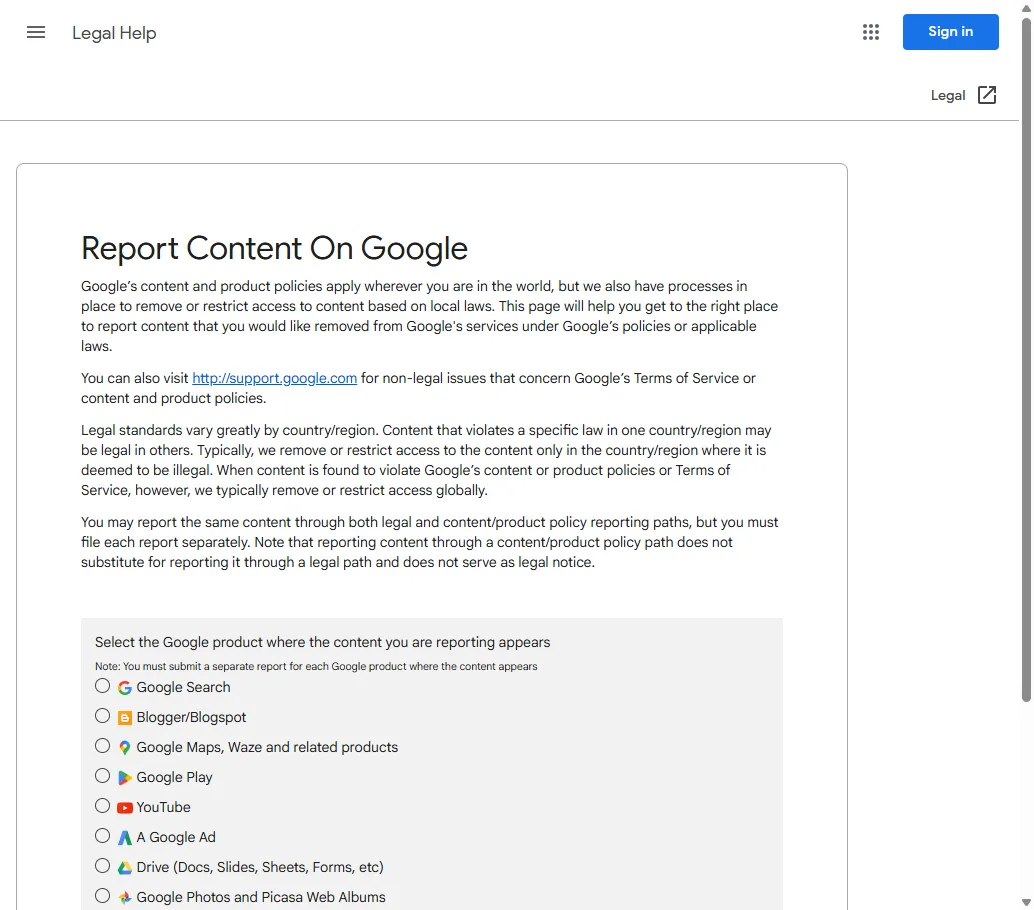
When a friendly message does not work (or is not worth trying), filing a Patreon DMCA takedown is your strongest legal tool. The DMCA requires platforms to remove infringing content once they receive a valid notice.
DMCA forms for major platforms
Unlike adult content that lands on specialized sites, Patreon piracy spreads across mainstream platforms:
| Platform | DMCA Form | Typical Response |
|---|---|---|
| Google Search | Google DMCA Form | 1-3 weeks |
| YouTube | YouTube Copyright Form | 5-10 days |
| Pinterest IP Form | 1-3 weeks | |
| DeviantArt | DeviantArt Report → Copyright | 1-2 weeks |
| Reddit Copyright Form | 1-2 weeks | |
| Twitter/X | X DMCA Form | 1-2 weeks |
| Discord | Discord Trust & Safety | 1-3 weeks |
| Telegram | Telegram DMCA | Often no response |
| Mega | Mega Takedown | 5-10 days |
| Google Drive | Google Legal Support | 1-3 weeks |
For torrent sites and course piracy forums
These are harder to address:
- File the DMCA anyway - Some respond, especially larger sites
- Contact hosting providers - Use WHOIS to find hosts
- Focus on search engine deindexing - If people can’t find it, impact is reduced
- Report to Cloudflare - Many piracy sites use Cloudflare; they forward reports
Patreon also has its own copyright policy. If someone infringes your work on Patreon itself (rare, but it happens with impersonation), you can report it through their form.
DMCA notice template for Patreon creators
Customize based on your content type:
Subject: DMCA Takedown Notice - Copyrighted [Art/Music/Course/Podcast] Content

To Whom It May Concern,

I am writing to notify you of copyright infringement under 17 U.S.C. § 512(c).

I am the original creator of [CONTENT TYPE] published exclusively through my Patreon
(patreon.com/[YOUR_USERNAME]). The following URLs display my copyrighted material
without authorization:

INFRINGING URLS:
[URL 1] - [Brief description: "My digital painting 'Title'"]
[URL 2] - [Brief description: "Episode 45 of my podcast"]
[URL 3] - [Brief description: "Module 3 of my course"]

ORIGINAL CONTENT LOCATION:
patreon.com/[YOUR_USERNAME]/posts/[POST_ID]
[Additional proof: your website, social media, dated files]

I have a good faith belief that the use of this material is not authorized by me,
my agent, or the law. I declare under penalty of perjury that this information is
accurate and that I am the copyright owner.

Please remove or disable access to this material promptly.

Contact Information:
Name: [YOUR LEGAL NAME]
Email: [YOUR EMAIL]
Address: [YOUR ADDRESS]

Electronic Signature: [YOUR NAME]
Date: [DATE]
How do I find out if my content was leaked?
The answer depends on your content type.
For visual content (art, comics, design)
- Google Images reverse search - Upload your images monthly
- TinEye - Better for exact matches
- Social media searches - Search your art titles, character names
- Pinterest monitoring - High volume of uncredited reposts
For audio content (podcasts, music)
- Google Alerts - Set up for your show/artist name + “download” or “free”
- YouTube searches - Check for re-uploads of episodes/tracks
- Content ID (for music) - Automated detection on YouTube
- Podcast app searches - Look for unauthorized feeds
For educational content
- Google searches - “[Course name] free download” or “torrent”
- Reddit searches - Course sharing subreddits exist
- Telegram searches - Use telegram search bots for your course name
Automated monitoring services
Manual monitoring eats hours. Professional services offer:
- 24/7 automated scanning across platforms
- Dark web and private forum monitoring
- Automatic DMCA filing when content is found
- Tracking of re-uploads after takedowns
Can I handle takedowns myself or do I need help?
DIY makes sense when:
- You have occasional piracy (monthly, not daily)
- Content appears on compliant platforms (YouTube, Reddit, major social)
- You have time for monitoring and filing (5-10 hours/month)
- Your content type has good search visibility (visual > audio > educational)
Professional help makes sense when:
- Piracy is persistent and widespread
- Content appears on offshore or resistant sites
- You’re losing real money to piracy
- You’d rather spend time creating than policing
| Factor | DIY | Professional Service |
|---|---|---|
| Monthly cost | $0 | From $59 |
| Your time | 5-10 hrs/month | Near zero |
| Compliant site success | High | High |
| Offshore site success | Low | Moderate |
| Monitoring coverage | Manual, limited | Automated, broad |
| Anonymity | Your name on public records | Service name used |
Real examples: how Patreon creators fought back
Digital artist: illustration piracy
Situation: A concept artist with 2,000 patrons found their tutorial series and PSD files shared on multiple platforms.
Where content appeared:
- Pinterest (200+ uncredited reposts)
- DeviantArt (3 accounts claiming ownership)
- Tutorial piracy Discord servers
- General art sharing forums
Actions taken:
- Filed DMCA to DeviantArt - all 3 removed within a week
- Mass Pinterest takedown requests - 80% removed over 2 weeks
- Discord reports - servers warned/removed
- Implemented tiered watermarking system
Result: About 85% of known piracy removed. Ongoing monitoring now catches new instances within days.
Podcaster: early access leaks
Situation: A true crime podcast with 5,000 patrons had early-access episodes appearing on public RSS aggregators same-day.
Where content appeared:
- Third-party podcast apps scraping patron feeds
- YouTube “full episode” re-upload channels
- File hosting links on Reddit
Actions taken:
- YouTube Content ID registration - auto-catches re-uploads
- Reddit DMCA - removed after about a week
- Contacted major podcast apps about scraping - mixed results
- Switched to shorter early-access windows (1 week vs. 1 month)
Result: YouTube re-uploads now auto-blocked. Reduced early-access window decreased incentive for same-day piracy.
Educator: course piracy
Situation: An educator with a $400 course found complete course archives on multiple piracy forums and torrent sites within 1 week of launch.
Where content appeared:
- 3 course piracy forums (offshore)
- Multiple torrent trackers
- Telegram education channels
- Google Drive shared folders
Actions taken:
- Google deindexing for all findable URLs
- Google Drive/Mega takedowns - successful
- Telegram reports - 1 of 3 channels removed
- Forum takedowns - limited success (offshore)
- Restructured course: less downloadable content, more community value
Result: Still an ongoing battle. The focus shifted to making the legitimate purchase better than the pirated version: community access, updates, and direct support.
Is it even worth fighting piracy?
Piracy is a reality for successful creators. The goal is not to eliminate it but to manage it.
Accept what you can’t stop:
- Some exposure from piracy leads to new patrons
- Fighting every instance is not worth the time
- Make paying the easiest option
Build value that piracy can’t copy:
- Community access that requires membership
- Regular updates and new content
- Direct creator interaction
- Exclusive live events or sessions
Invest in technical protection:
- Watermarking appropriate to your content type
- Platform choices with better protection
- Monitoring systems (manual or professional)
Frequently asked questions
- Does Patreon offer any built-in piracy protection?
- Barely. Patreon gives you patron-only post visibility and optional download restrictions. There is no watermarking, DRM, or leak detection. Protection is on you.
- My art is being reposted without credit on Pinterest - what can I do?
- File DMCA takedowns through Pinterest's IP reporting form. For mass infringement, you can file batch requests. Consider adding visible watermarks to make uncredited sharing less appealing. Some artists watermark preview images but provide clean versions to patrons.
- Someone is sharing my podcast episodes before they go public - how do I stop this?
- Patreon has built-in RSS protection. Each patron gets a unique RSS link, and Patreon monitors how many devices use each link. If sharing is detected, Patreon automatically resets the link (cutting off unauthorized users). A second offense suspends the patron's commenting/DM privileges for 7 days. Report persistent abusers to Trust & Safety for further action.
- My entire course appeared on piracy forums within days of launch - is it worth fighting?
- Pick your battles. File Google deindexing requests to cut discoverability. Target file hosts (Mega, Drive) that respond to DMCA. Direct takedowns on offshore forums rarely work. Instead, make the real course worth paying for: community, updates, and support that piracy can't replicate.
- Should I watermark my music/audio content?
- Audio watermarking is less visible but still worth doing. Options include brief spoken identifiers, unique audio signatures, or metadata embedding. For sample packs and stems, include license files and consider unique identifiers per patron. If you make music, register with YouTube Content ID.
- Can I identify which patron leaked my content?
- Sometimes, if you set things up ahead of time. Watermarks with patron-specific identifiers help trace leaks. For podcast RSS leaks, Patreon can identify which patron's feed was shared. For visual content, hidden watermarks can survive casual sharing. Without preparation, though, identification is usually impossible.
- Is piracy actually hurting my revenue, or is it free exposure?
- It depends on your content type and audience. For educational content, piracy often replaces sales directly. For art and entertainment, some piracy actually leads to new patrons. The honest answer is that it varies. Protect your highest-value content where piracy clearly substitutes for a purchase.
- How do I handle DMCA notices without revealing my real name?
- DMCA requires a legal name, and that name becomes public on the Lumen database. You have a few options: form an LLC and file under the business name, hire an attorney to file on your behalf, or use a professional takedown service that files under their own name.
- My game development builds are being shared - what can I do?
- Use time-limited download tokens that expire after 24-48 hours. Embed patron-specific identifiers in each build so leaks are traceable. Consider making builds preview-only and putting community access front and center. Some developers accept that build sharing is marketing for the final release.
- Telegram channels keep sharing my content - how effective are takedowns?
- Telegram DMCA compliance is inconsistent. They often don't respond at all. File reports to telegram.org/dmca persistently, but don't count on it. Focus on removing invite links from public spaces (Google, Reddit) to limit channel growth. Some channels are truly private and unreachable, so put your effort where it actually works.
- How much time should I spend on anti-piracy efforts?
- For most creators, 5-10 hours a month covers monitoring and takedowns on compliant platforms. Beyond that, either accept some level of piracy or pay for a professional service. Time spent creating almost always earns more than time spent policing.
- Can I sue someone for pirating my Patreon content?
- Technically yes, but lawsuits are expensive and rarely practical for individual creators. Most pirates are anonymous, overseas, or judgment-proof. DMCA takedowns are the better option. Lawsuits only make sense for large-scale commercial piracy where you can identify the defendant and prove real damages.